


Your Property Taxes in Action
Florida property taxes pay for the local services you use every day, and Cape Coral has created a “toolkit” so residents can see where their dollars go and what affects their bill.
Key tools a Cape Coral homeowner can use
| Property Checkbook | Lets you enter an address and see the actual city property tax, assessments, and fees for that parcel, plus a comparison with what similar services would cost in other Florida cities. |
| Property Information Page | Direct links to the Lee County Property Appraiser (values and classifications), Lee County Tax Collector (tax bills and payments), and the City’s GIS property profile (size, zoning, land use, etc.). |
| View current and past City budgets, including amendments and budget ordinances. | |
| More frequently asked questions about how millage rates are set, what services they fund, and how to read TRIM notices and tax bills. | |
| The State of Florida's estimates on the potential fiscal impact of the proposed homestead tax amendment on cities and counties across the state. |
Cape Coral Property Taxes: About Amendment 3
Download this information as a flyer
Highlights:
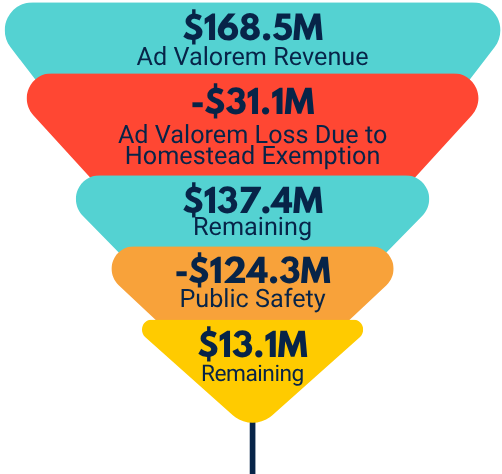
- City of Cape Coral to lose $31.1M tax revenue in Year 1*
- City of Cape Coral to lose $56.9M tax revenue in Year 2*
- Fiscal Year 2027 Total General Fund Budget: $284.7M
The City of Cape Coral depends primarily on property taxes to fund City services. The City does not have a large commercial tax base; 91.4% of our City is residential, and 60.8% of residential improved properties are homesteaded, resulting in a $31.1M loss in revenue if property taxes were eliminated from homesteaded properties.
Current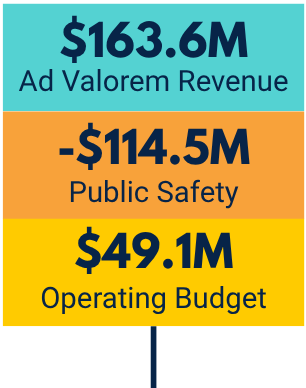 |
|
To help fund City facilities, parks, and infrastructure; protect City systems from cyber threats; conduct public meetings; maintain financial reserves for emergencies; transportation, administration, and plan, coordinate, and deliver City events. |
|
|
To help fund City facilities, parks, and infrastructure; protect City systems from cyber threats; conduct public meetings; maintain financial reserves for emergencies; transportation, administration, and plan, coordinate, and deliver City events. |
|
|
To help fund City facilities, parks, and infrastructure; protect City systems from cyber threats; conduct public meetings; maintain financial reserves for emergencies; transportation, administration, and plan, coordinate, and deliver City events. |
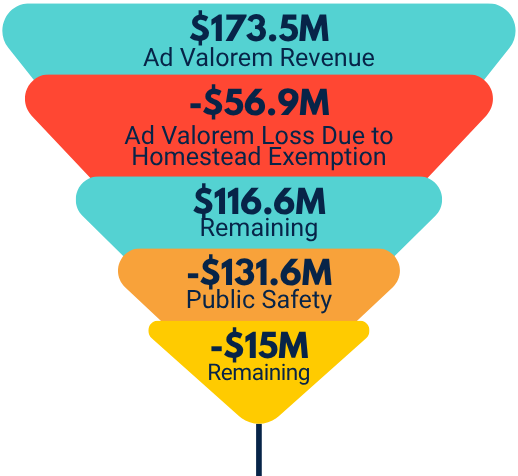
*Per the FL Office of Economic and Demographic Research.
View the original data from the FL Office of Economic and Demographic Research
How Florida property taxes work
- Property taxes are local in Florida. Counties, cities, school boards, and special districts each set a millage rate based on their budget needs.
- A millage rate is the tax per $1,000 of taxable value; for example, a rate of 5.2 means $5.20 in taxes for every $1,000 of taxable value.
- Your bill is essentially: (Assessed Value - Exemptions) × Total Millage Rate = Property Tax, where the total millage is the sum of all taxing authorities on your bill.
- For homesteaded homes, the “Save Our Homes” cap limits how much the assessed value can increase each year (3% or inflation, whichever is lower), which helps keep long‑term owners’ taxes more predictable.
- Some city services are funded fully or partly through special assessments (for example, Fire Services Assessment and Solid Waste Assessments), which are included on your annual property tax bill as a non-ad valorem charge.
Florida’s average effective property tax rate is slightly below the national average, but rates vary by county.
How Your City Tax Dollar Works
Across Florida, cities manage their budgets carefully to maintain strong services without overburdening taxpayers. Despite rising costs, many cities have held property tax rates steady, or even lowered them, while still meeting residents’ needs through efficient local governance. In Cape Coral, city services are funded mainly through user fees and taxes:
- User fees are direct charges for specific services like water, garbage, or recreation programs, so you know exactly what you’re paying for.
- Taxes go into a shared pool that supports community-wide services such as parks, transportation, and public safety, benefits that everyone can use without an individual bill.
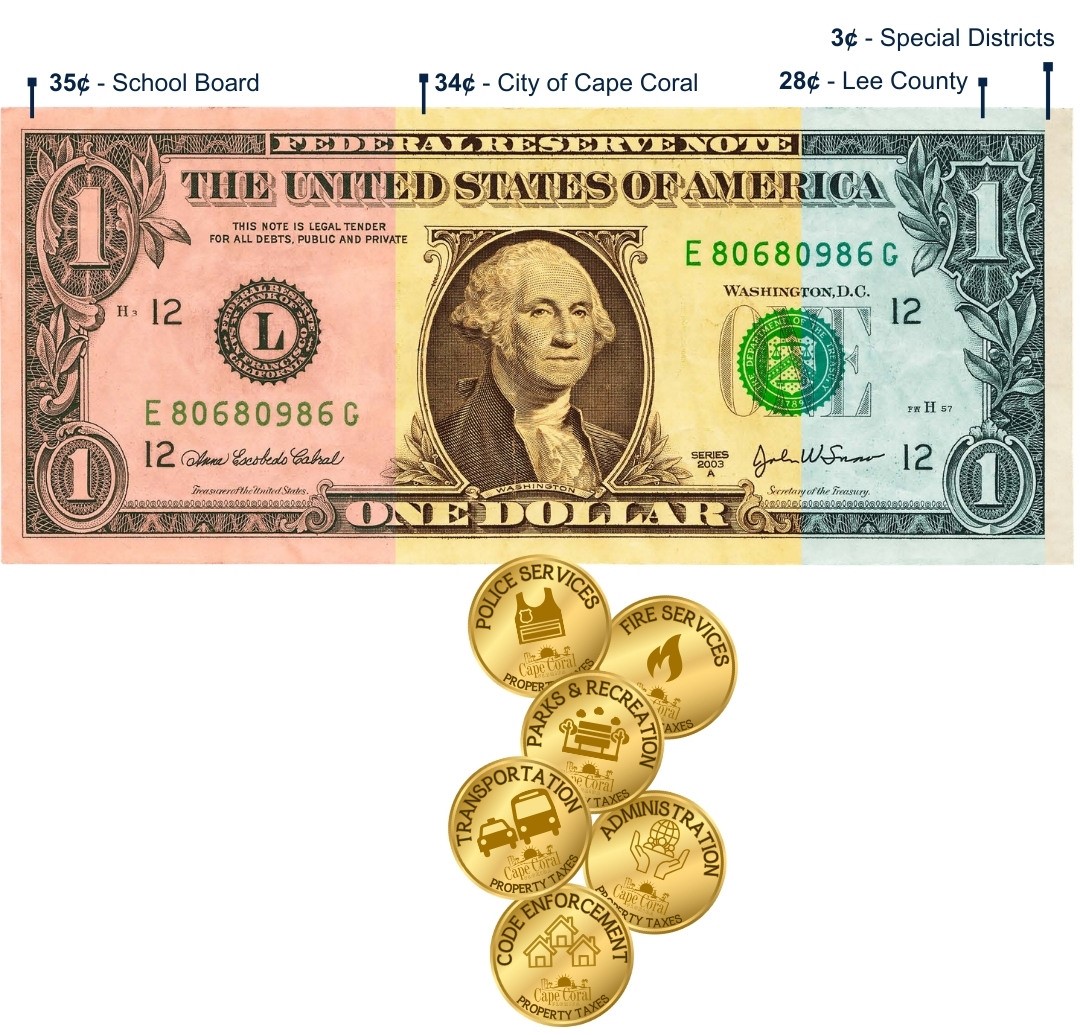
Every city property tax “dollar” in Cape Coral was allocated roughly as follows:
Why these taxes matter for a Cape Coral resident
34% of that dollar helps keep the city running, from clean, drivable roads and safe neighborhoods to parks, recreation, and economic growth.
Public safety, including police, fire, and emergency response, remains one of the largest parts of city budgets and is funded heavily by local property taxes. Since COVID, the cost of vehicles, fuel, equipment, and training has risen, but many cities have kept tax rates relatively stable or lower. If property taxes were cut too deeply, it would impact the City’s ability to provide essential services or increasing other fees, which is why keeping funding local, visible, and accountable is so important.
For many Cape Coral households, especially with no state income tax in Florida, property taxes are one of the largest direct contributions they make to funding their local quality of life.
As an additional resource on the potential impacts of the proposed property tax changes on the City of Cape Coral, please see below for a letter from Mayor John Gunter to the Lee County Legislative Delegation.
Homestead Exemption Letter to the Lee County Legislative Delegation
It’s the tax rate applied to every $1,000 of taxable property value. A millage rate of 5.2 means $5.20 in city taxes for every $1,000 of assessed value.
In Cape Coral, your City Council does, through public hearings and an open and transparent budget process. Decisions are made close to home, not by faraway politicians.
- Assessed Value – Set by the County Appraiser based on market value.
- Exemptions – Homestead and other exemptions reduce your taxable value.
- Assessment Caps – Save Our Homes caps growth for full-time residents.
- Millage Rate – Set annually by City Council.
City property taxes fund local essentials—services that protect safety, maintain infrastructure, and preserve quality of life. These include:
- Police Services
- Fire Services
- Parks and Recreation
- Transportation
- Administration
- Code Enforcement
Yes. Here’s how:
- Apply for exemptions like the homestead exemption.
- Review your assessed value—appeal if it’s inaccurate.
- Attend public budget hearings and make your voice heard.